
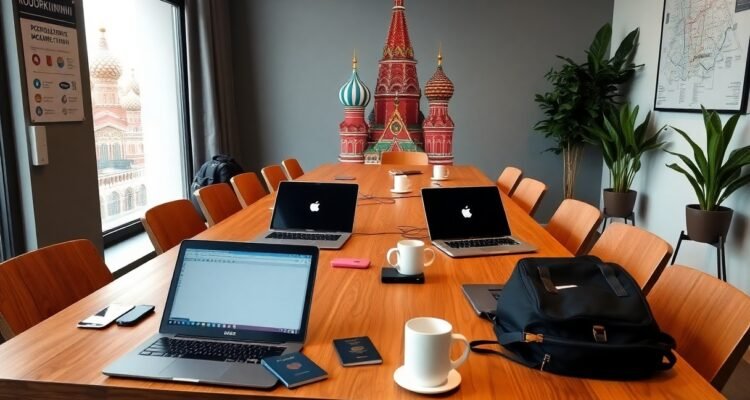
You can find co-working jobs for nomads in Moscow, and I share how to search, network, and avoid pitfalls; I’ve found a vibrant coworking scene with friendly communities, but also note that some neighborhoods can be risky at night, so plan your commute and accommodations. I recommend checking listings like Jobs in Moscow, Russia | GoAbroad.com and reaching out to hosts so your work-and-travel experience is productive and safe.
Types of Co-Working Jobs
| Remote Developer | Backend/frontend roles for EU/ME clients; senior devs can earn 120,000-300,000 RUB monthly while working from Moscow co-working hubs like Flacon or Digital October. |
| Remote Designer | UX/UI and product design gigs via Dribbble/Behance or agencies; typical contract rates range $30-80/hr, many designers use quiet desks in shared spaces. |
| Customer Support / Community Manager | Shift-based roles for SaaS and apps, often part-time 20-40 hrs/week; you’ll join local meetups and run events inside co-working venues. |
| Freelance Copywriter / Translator | Per-word and per-project jobs between RU/EN; translators charge ~$0.03-0.08/word, and copywriters bill per article or retainer via Upwork/Hh.ru. |
| On-site Co-working Roles | Community managers, event coordinators and part-time receptionists-salaries commonly 40,000-80,000 RUB plus free desk time and networking perks. |
- co-working desks often host meetups where I find remote leads.
- Many nomads combine freelance gigs with part-time on-site roles for stability.
- Moscow hubs publish local job boards and Slack channels that I use weekly.
Remote Job Opportunities
I regularly see full-time remote roles advertised on LinkedIn and hh.ru that suit nomads based in Moscow; for example, mid-level backend engineers often post salaries between 150,000-250,000 RUB/month while working remotely for CIS and European startups. Many companies expect stable overlap with European time zones, so you should plan your schedule around core hours (usually 10:00-16:00 CET) when you book meeting rooms at a co-working space.
When I screen listings I filter for clear payment terms and contract type because payment delays and international transfer fees are the most common risks; platforms like Toptal and Upwork offer escrow that reduces that risk. You can also find hybrid roles at local companies-Yandex and smaller Russian fintechs sometimes advertise remote-friendly positions that let you use a desk in their partner co-working locations.
Freelance Positions
I pick up most freelance work through Upwork, Behance leads, and direct client referrals after networking at coworking events; short projects (1-4 weeks) pay well for designers and developers, typically $500-$4,000 per project depending on scope. For translators and copywriters you’ll see steady volume but lower per-item rates, so I combine several small gigs to reach a stable monthly income.

From my experience the best-paying freelance contracts come from narrow specializations-like fintech UX, React performance tuning, or legal translation-where clients pay premiums for expertise; in Moscow you can market these skills through meetups and targeted Slack groups inside co-working spaces.
I also keep one paragraph of extra detail about freelance work: I track expenses and invoices carefully because tax treatment changes if your freelance income exceeds certain thresholds, and tax residency questions can affect your net pay; you’ll want to consult a local accountant if you cross those limits. Knowing how to route contracts (direct client vs. platform) dramatically reduces disputes and speeds up payment.
Tips for Finding Work in Moscow
I focus on combining online searches with in-person outreach: target listings that mention co-working or remote options, prepare a short Russian and English pitch, and follow up within 48 hours after meeting someone in person. Practical actions that helped me get faster responses include:
- Search hh.ru, LinkedIn, and local boards like FL.ru or YouDo using keywords such as удалённая работа, частичная занятость, and co-working jobs
- Attend 1-2 meetups a week at hubs like WeWork, SberSpace or independent spaces and add contacts to a follow-up list
- Keep a concise portfolio (3-5 best projects) and a one-page Russian CV formatted for ATS scans
- Use co-working Telegram channels and member directories to spot short-term gigs or subcontracting opportunities
- Vet offers quickly: ask for scope, payment terms, and references before committing to any on-site meeting
Knowing which co-working hubs and job boards consistently post roles in your field lets you focus your time and increases responses.
Networking in Co-Working Spaces
I treat co-working days as active job-seeking days: I join morning coffee sessions, volunteer to host a micro‑workshop, and post availability in the space’s Slack or Telegram. In Moscow I’ve connected with clients after introducing myself to 10-15 people at a single event; one informal 10‑minute chat led to a two‑month contract within a week. Use your pitch to state what you solve and include a link to a portfolio or LinkedIn profile.
I always follow up within 24-48 hours with a short message and a proposed next step (15‑minute call or coffee). Bring business cards, offer to review a quick task for free if appropriate, and be wary of requests for upfront personal information-scams happen, so confirm company details and payment terms before starting paid work.
Online Job Portals
I scan platforms daily and set alerts for targeted searches: hh.ru for Moscow roles, LinkedIn for startups and international firms, and niche freelancing sites like FL.ru, Upwork, and YouDo. Filtering for “удалённая” or “частичная занятость” quickly surfaces flexible listings; in one week of focused searching I found dozens of relevant postings in design and dev. Pay attention to language requirements-many local listings require Russian, while international teams often accept English.
I optimize applications by matching keywords from the posting, attaching a short case study, and using a one-paragraph cover letter that addresses the client’s top requirement. Keep negotiation terms clear in the first exchange and prefer platforms with escrow or contracts to reduce risk from dubious offers.
More practically, I set up email and mobile alerts, maintain two CV versions (Russian and English), and save search queries so I can re-run them quickly; when I apply, I mention the co-working spaces I use if it signals local availability and reliability to employers. Knowing how to combine targeted portal filters with proactive follow-up doubles the response rate in my experience.
Step-by-Step Guide to Start Working Remotely
| Step | Action |
|---|---|
| Choose a workspace | Compare day-pass vs monthly: day passes in Moscow typically cost 600-1,500 RUB, monthly desks range 8,000-30,000 RUB; test 2-3 spaces before committing. |
| Sort connectivity | Target 50-100 Mbps for stable video calls; carry a local SIM with 20-50 GB for tethering and a 20,000 mAh battery pack as backup. |
| Prepare gear | Pack a 24-27″ monitor adapter, compact keyboard, noise‑cancelling headphones, and a 500 GB external SSD for backups. |
| Set admin | Decide invoicing method, keep copies of contracts, and arrange travel/health insurance that covers remote work abroad. |
| Plan your schedule | Define core overlap hours with clients (e.g., four-hour window), block deep-work sessions, and reserve buffer time for meetings and transit. |
Setting Up Your Workspace
I set up a compact kit that moves with me: a 27″ external monitor, a foldable laptop stand, a mechanical travel keyboard, and noise‑cancelling headphones. When I test a Moscow co-working space I check the Wi‑Fi speed (I aim for at least 50 Mbps), the number of power outlets per desk, and whether meeting rooms are bookable by the hour-many places charge 500-2,500 RUB/hour for rooms. If the venue’s public Wi‑Fi looks crowded, I tether from a local SIM to avoid dropped video calls or data interception.
I also make ergonomics non‑negotiable: I use a laptop stand to get the top of the screen at eye level and bring a compact mouse to avoid wrist strain. For power reliability I carry a 20,000 mAh power bank and a multi‑plug travel adapter; in colder months I check heating and in summer I check ventilation since long workdays feel very different in each season. Small investments-an external SSD for nightly backups and a password manager-pay off when a hard drive fails or a login is needed fast.
Managing Time Effectively
I manage time by protecting focused blocks and limiting meetings: I aim for three deep‑work sessions of 60-90 minutes each and schedule all calls inside a fixed core window (for example, 11:00-15:00 local time) so clients and teammates know when I’m available. Tools like Google Calendar, Toggl for tracking, and Calendly for scheduling save me hours each week; I set meeting lengths to 25 or 40 minutes to force concise agendas and leave 10-15 minute buffers between bookings to handle overruns or quick breaks.
I also use techniques that scale: Pomodoro (25/5) for burst editing tasks and 90‑minute blocks for deep work such as coding or writing. When I cross time zones I block an extra 30 minutes for asynchronous handoffs and send a daily summary email at the end of my day so colleagues in other zones can pick up without delays. To avoid notification fatigue I turn off noncrucial apps during deep blocks and keep messages bundled into two or three response windows per day.
For a practical example, my weekday looks like: morning admin and email (8:30-9:30), first deep block (10:00-11:30), client core hours with calls and collaboration (11:30-15:00), second deep block (15:30-17:00), then wrap‑up and plan next day (17:00-17:30); this structure helps me protect focus while still giving you reliable windows for meetings and deliverables. I watch for signs of overload-when my attention slips I shorten meetings, add a full day off every two weeks, and re-balance the schedule.
Factors to Consider When Choosing Co-Working Spaces
I weigh several practical things when I compare co-working options in Moscow because as a nomad my time and comfort matter; I look for spots that cut commute times, offer reliable Wi‑Fi, and host a community that fits my work rhythm. In central districts like Tverskoy, Arbat and Kitay‑Gorod you can often expect shorter walks to metro (typically under 10-15 minutes) and more networking events, while peripheral locations might save you money but add 30-60 minutes daily in transit.
- Location & accessibility – proximity to metro, tram or bus stops; 10-minute walk is ideal for me.
- Amenities & services – reliable internet, meeting rooms, kitchen, shower, and printing.
- Cost – hot desk vs dedicated desk vs private office; monthly passes in Moscow commonly range widely, so compare inclusions.
- Community – frequency of meetups, language mix (English/Russian), and event calendars.
- Security & legal access – entry policies, ID requirements, and 24/7 access if you travel overnight.
I always check reviews for concrete examples – one space near Belorusskaya I used had free meeting-room hours included with a monthly pass, while another advertised 300 Mbps but throttled after 100 GB; those kinds of specifics change my choice faster than brand names.
Location and Accessibility
I prioritize location by mapping my common routes: if I need to meet clients in Presnensky or the Garden Ring, a base within a 10-15 minute walk to a major metro line saves me hours monthly. Stations on the Circle Line (Line 5) and major interchange hubs cut multi-line transfers, and I treat a 20-30 minute one-way commute as a negative factor unless the price or amenities justify it.
Transit options matter beyond metros: I check for nearby overnight taxi availability, bike racks, and parking if I rent a car, and I ask about building entry rules – some business centers in Moscow require corporate registration or strict ID checks that can complicate short-term stays. If you expect late work sessions, confirm 24/7 access or after-hours security so you’re not locked out when you need to be productive.
Amenities and Services Offered
I assess technical basics first: advertised Wi‑Fi speeds (I aim for at least 100 Mbps in busy spaces), wired Ethernet options, and redundant internet/back‑up power for critical calls. Meeting rooms availability and pricing is next – many places charge per hour (typically 500-2,000 RUB depending on size and AV), so I calculate expected monthly meeting costs rather than assuming inclusions.
Additional perks influence my choice: kitchens with free tea/coffee, quiet booths for calls, phone booths, lockers, printing quotas, showers (handy after long travel), and community events. I once stayed in a space that offered weekly pitch nights and mentorship sessions, which led to a client introduction within two weeks – that kind of networking value can offset higher membership fees. I also flag security issues: poorly lit entrances or lack of CCTV are red flags, while staffed receptions and keycard access are strong positives.
For more detail on amenities, I probe service-level specifics: how many meeting rooms per 50 desks, whether AV equipment is included or rented, exact printing allowances, whether cleaning is daily, and if there’s an on-site community manager who runs events; those facts determine both convenience and hidden costs when I calculate the true price per productive hour.
Knowing which of these factors align with your work style will make choosing a co-working space in Moscow far more efficient.
Pros and Cons of Co-Working for Nomads
Quick comparison of typical advantages and drawbacks
| Pros | Cons |
|---|---|
| Access to reliable high-speed internet and office-grade printers | Some spaces have variable connectivity during storms; check for UPS/generator backup |
| Flexible passes: day passes (typically 500-1,500 RUB), hot desks and monthly plans | Monthly plans can be 10,000-35,000 RUB for a dedicated desk, which adds up fast if you move often |
| Central locations near metro hubs – saves commute time when you’re in the city | Prime locations are noisier and busier; privacy for calls can be limited without phone booths |
| Built-in networking: workshops, meetups and startups sharing space | Community fit varies; you might need to try 2-3 spaces before finding one where you connect |
| Professional environment for client meetings and interviews | Booking meeting rooms often costs extra and fills up quickly during business hours |
| On-site amenities: kitchens, lockers, event areas – useful for longer stays | Some amenities require additional fees or local ID to access |
| Local staff can help with logistics, printing, and recommendations | Language can be a barrier; English support is common in central hubs but not guaranteed |
| Safer than working from cafés late at night; more predictable security and policies | Legal and visa rules for long stays may still apply; coworking doesn’t replace residency paperwork |
Benefits of Co-Working
I often choose coworking in Moscow because it gives me immediate access to stable infrastructure-fast Wi‑Fi, reliable power, and meeting rooms that impress clients. Many central spaces host 1-2 events per week like pitch nights or language exchanges; when I joined one in Kitai‑Gorod, I met two collaborators who later helped me land a short contract. You save time and mental overhead compared with hunting cafés or relying on inconsistent hotel desks.
Beyond equipment, I value the social structure: working alongside designers, developers and founders makes it easy to get informal feedback or a referral. For budgeting, day passes around 500-1,500 RUB and flexible monthly plans let me match commitment to travel plans, so I can switch neighborhoods without long leases.
Challenges Faced by Nomads
From my experience, the biggest challenge is logistical: payment methods, ID requirements and language can slow you down. Some spaces prefer local bank cards or require a passport copy for membership; when I arrived once without the right card, I had to pay a higher day rate. You should check booking and cancellation policies in advance, since peak times (weekday mornings) see meeting rooms booked out.
Another headache is consistency: community vibe, noise levels and available services vary widely between chains and independent spaces. I’ve tried three spaces in one month and found one great for quiet focus, another full of events at night, and a third where the internet throttled during backups-so sampling before committing to a monthly desk pays off.
For more context, watch out for visa/registration constraints if you plan extended stays and evaluate data security for sensitive work-use VPNs and ask about guest policies. If you rely on uninterrupted work, prioritize locations that advertise power backup and private booths, and factor in the extra cost of meeting-room bookings when you estimate your monthly budget.
Resources for Digital Nomads in Moscow
I track coworking availability through a mix of sites and local contacts; across Moscow there are well over 150 coworking locations, from global chains like WeWork and Regus to niche creative hubs such as Flacon and Skolkovo’s innovation spaces. You can expect monthly hot-desk plans roughly in the range of 10,000-35,000 RUB, while daily passes often cost about 400-1,500 RUB; many spaces advertise 100-500 Mbps business-class Wi‑Fi and 24/7 access. If you want short-term housing that links directly to community and workspace options, I recommend checking coliving listings like Coliving in Moscow for turnkey setups that include networking events and on-site desks.
Beyond coworking, I use local libraries (many central branches offer free-ish study spaces), specialty cafes with reliable power and sockets, and neighborhood business centers when I need private meeting rooms. Expect public-transport convenience: most high-quality spaces sit within a 10-20 minute walk of a metro station, and a few primo locations on the Garden Ring charge premium rates. For contracts or longer-term private offices, I’ve seen six- to twelve-month terms with deposits equivalent to one month’s rent-so budgeting for deposits up front is a smart move.
Local Communities and Support Networks
I plug into several active networks: Meetup and Internations host regular events (tech meetups with 30-200 attendees), and Facebook groups like “Expats in Moscow” are good for quick questions about apartments, SIM cards, or visa agents. Telegram is where real-time help lives-channels for remote workers and expats share last-minute desk openings, language exchange meetups, and classifieds; I’ve picked up reliable leads that saved me hundreds of rubles on space bookings.
When I’ve needed legal or tax help, coworking spaces often recommend local consultants who specialize in foreign freelancers-expect hourly rates from 2,000-6,000 RUB for basic consultations. For health and safety, I follow a couple of English-speaking community pages that post verified clinic recommendations and on-the-ground updates; having those contacts saved in your phone can be very helpful in an emergency.
Useful Websites and Apps
I rely on a short toolkit: Yandex.Maps and 2GIS for navigation and business hours, Yandex.Go (and Uber where available) for rides, Coworker.com and the spaces’ own sites for bookings, Nomad List for weather and cost comparisons, and Telegram for community chat and classifieds. For everyday services I use Gosuslugi (official government portal) for registrations and appointments, Flamp for local reviews, and Google Translate or Yandex.Translate for on-the-fly Russian. Local SIMs from MTS, Beeline, or Megafon give the best coverage; expect to pay roughly 200-800 RUB/month depending on data volume.
I also recommend storing offline maps and having multiple payment options-cards and some cash-because while card acceptance is widespread, small vendors may be cash-only. Be aware of scams around unofficial accommodation offers and unverified agents; I always verify with at least two sources and read recent reviews before transferring any money. Using Telegram channels for last-minute desk availability and coworking promotions has saved me up to 40% on day passes during off-peak periods.
Conclusion
Now I find that Moscow does offer co-working opportunities for nomads: a growing number of coworking spaces, cafés with reliable Wi-Fi, freelance marketplaces, and startups that hire remote or hybrid workers make it possible to find project-based, part-time, or community-oriented roles. I’ve seen nomads connect through meetups and local groups to land gigs that let them work flexibly while enjoying the city.
I encourage you to try day passes, attend networking events, and use local job boards and coworking communities – I’ve found that combining online searches with in-person visits helps you discover the best fits quickly. With a bit of persistence and attention to visa and tax rules, your chances of finding suitable co-working jobs in Moscow are good.
FAQ
Q: Are there co-working jobs available for nomads in Moscow?
A: Yes. Moscow has a steady demand for on-site roles in co-working spaces-community managers, receptionists/hosts, event coordinators, part‑time baristas, cleaning and operations staff, and freelance facilitators (workshops, meetups). Demand is highest in central districts and creative clusters; international or English‑friendly spaces and startup hubs often seek staff with good communication skills and flexible schedules. Compensation and hours vary by role, from hourly shifts and part‑time contracts to full‑time salaries, and bilingual candidates typically command higher pay or more interesting roles.
Q: How do nomads find and secure co-working jobs in Moscow?
A: Search a mix of channels: direct outreach to large chains and local spaces (WeWork, Impact Hub, independent hubs), job boards (hh.ru, rabota.ru), LinkedIn, Telegram and Facebook groups for expats and hospitality jobs, and local community events where managers recruit. Walk‑in inquiries and offering to help at events or as a short‑term contractor are effective for getting a foot in the door. Prepare a concise CV in Russian and English, relevant references or a short portfolio of past community or events work, and be ready to explain availability and length of stay clearly.
Q: What visa, tax and legal issues should nomads consider before taking a co-working job in Moscow?
A: Working in Russia typically requires the correct legal status. A tourist visa does not authorize employment for Russian employers; long‑term work usually requires a work visa/permit or local employment arrangement. Remote work for a foreign employer while physically in Russia is legally and tax‑sensitive-if you stay over 183 days you may become a Russian tax resident liable for local taxes. Short freelance gigs can still carry legal obligations. Always check your visa type, register if required by migration rules, clarify contract terms (employee vs. contractor), and consult an immigration or tax specialist before accepting paid work.
Anastasia is a Moscow-based travel blog writer who brings a local’s insight to one of the world’s most fascinating and misunderstood cities. Born and raised in Moscow, Russia, Anastasia shares an authentic, on-the-ground perspective on what it’s really like to explore the city beyond the postcards.
Her writing focuses on tourism in Moscow, practical guides for first-time visitors, and hidden corners that most travelers miss. In addition, Anastasia writes extensively about expat life in Moscow, covering everyday realities such as housing, transportation, cultural differences, and settling into life in the Russian capital.
As a solo traveler in her own city, she also documents Moscow through the lens of independence and curiosity — from navigating the metro alone at night to discovering cafés, museums, and neighborhoods that feel welcoming for solo visitors. Her work blends local knowledge with honest personal experience, helping travelers and expats alike feel more confident, informed, and inspired when discovering Moscow on their own terms.