
You don’t need to speak Russian to get around Moscow, especially in the centre, but a handful of phrases go a long way, both practically and in how people respond to the effort. This is the short list I’d actually give a friend before their first visit.
The essentials
- Hello: Zdravstvuyte (formal, the safest default with strangers)
- Thank you: Spasibo
- Please / You’re welcome: Pozhaluysta
- Yes / No: Da / Nyet
- Excuse me / Sorry: Izvinite
- How much does it cost: Skolko stoit?
- Where is…: Gde…?
- I don’t understand: Ya ne ponimayu
- Do you speak English: Vy govorite po-angliyski?
- Goodbye: Do svidaniya
Useful extras for getting around
- The bill, please (restaurant): Schyot, pozhaluysta
- One ticket: Odin bilet
- Help: Pomogite
- Left / Right / Straight ahead: Nalevo / Napravo / Pryamo
- Metro station: Stantsiya metro
A note on formality
Russian distinguishes between a formal “you” (vy) and an informal one (ty), similar to French or German. As a visitor, default to the formal register with anyone you don’t know; it reads as polite rather than distant, and getting it slightly wrong is a minor and forgivable mistake. Russians generally appreciate a visitor making the effort at all, so don’t let the fear of getting the grammar wrong stop you from trying.
Reading Cyrillic, even a little
You don’t need to read Russian to get by, but recognising the Cyrillic alphabet, even just sounding out letters, makes navigation noticeably easier: metro maps, street signs and menus become far less intimidating once the shapes stop being completely unfamiliar. A number of Cyrillic letters look identical to Latin ones but represent different sounds, which trips people up initially, so it’s worth spending twenty minutes with an alphabet chart before you travel rather than trying to learn it cold on the ground. Metro signage in central stations increasingly includes transliterated names alongside Cyrillic, which helps, but it isn’t universal across the whole system.
Getting by day to day
A translation app with offline support and a camera-based translation feature is genuinely useful for menus and signs, and worth downloading and testing before you travel rather than relying on it for the first time when you actually need it. Between that, the phrases above, and Moscow’s generally helpful attitude toward visitors making an obvious effort, language is rarely the biggest obstacle to a trip here.

Frequently Asked Questions
Do I need to speak Russian to visit Moscow?
No, especially in the city centre where English signage and some English-speaking staff are common, but a few basic phrases help considerably.
Is Russian hard to learn the basics of?
Pronunciation and grammar take real time to master, but learning to recognise the Cyrillic alphabet and a handful of survival phrases is achievable in a short study session before your trip.
Should I use formal or informal Russian with strangers?
Formal (vy), always, unless someone explicitly invites you to use the informal form.
Written by Anastasia Ivanova, Moscow native and author at allaboutmoscow.com. Last updated April 2026.
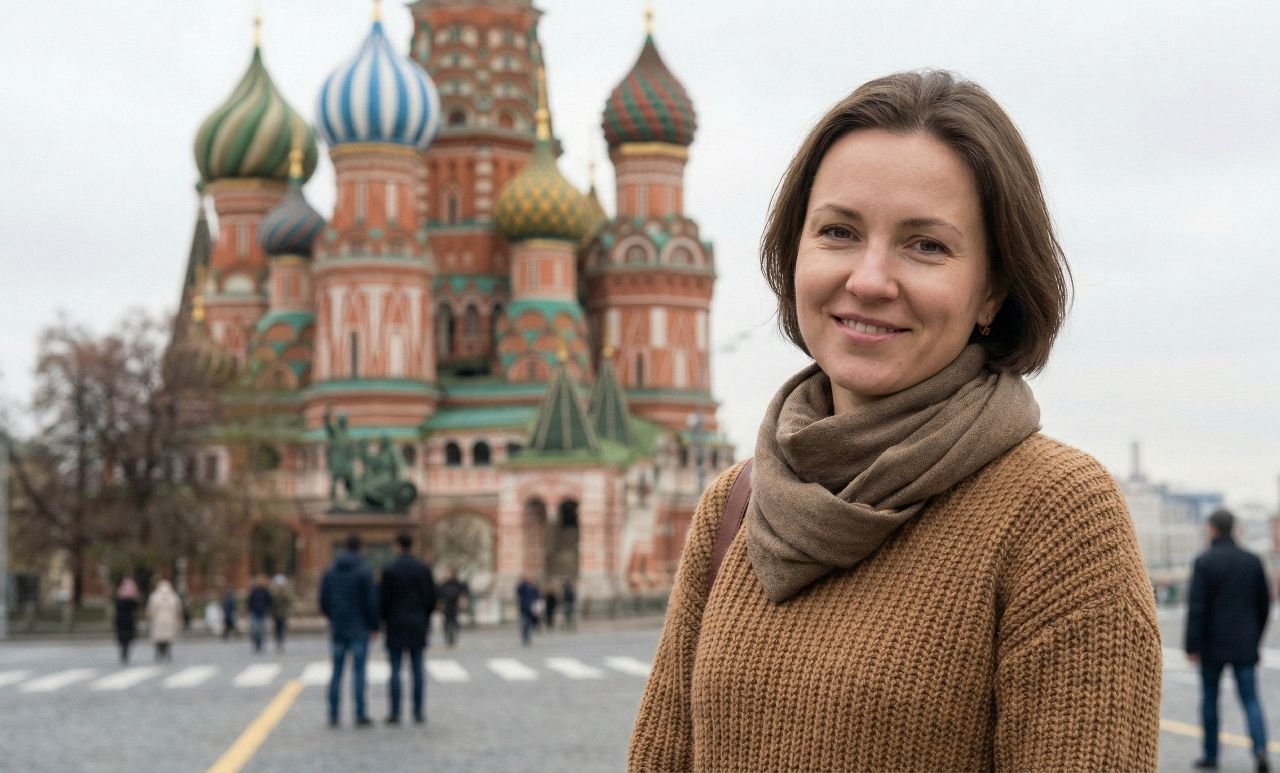
Anastasia is a Moscow-based travel blog writer who brings a local’s insight to one of the world’s most fascinating and misunderstood cities. Born and raised in Moscow, Russia, Anastasia shares an authentic, on-the-ground perspective on what it’s really like to explore the city beyond the postcards.
Her writing focuses on tourism in Moscow, practical guides for first-time visitors, and hidden corners that most travelers miss. In addition, Anastasia writes extensively about expat life in Moscow, covering everyday realities such as housing, transportation, cultural differences, and settling into life in the Russian capital.
As a solo traveler in her own city, she also documents Moscow through the lens of independence and curiosity — from navigating the metro alone at night to discovering cafés, museums, and neighborhoods that feel welcoming for solo visitors. Her work blends local knowledge with honest personal experience, helping travelers and expats alike feel more confident, informed, and inspired when discovering Moscow on their own terms.