
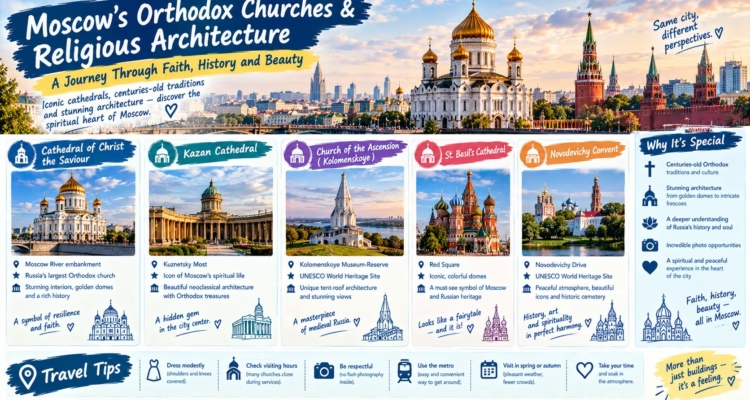
St Basil’s Cathedral gets most of the attention, and deservedly so, but it’s only the start of Moscow’s Orthodox architecture. The onion domes you’ll see across the city are one of its most consistent visual signatures, and a couple of sites beyond Red Square are well worth the detour.
Cathedral of Christ the Saviour
The largest Orthodox church in Moscow, and one with a genuinely dramatic history: the original 19th-century cathedral was demolished under Soviet rule in the 1930s, with plans at one point to replace it with a colossal Palace of Soviets that was never actually built due to a combination of engineering problems and the outbreak of war. The site spent decades afterward as a public swimming pool before the cathedral was rebuilt in the 1990s as a faithful reconstruction of the original. It’s an active place of worship and a major landmark on the Moskva River, within easy walking distance of the Kremlin, and its observation platforms offer one of the better elevated views of the city centre.
Novodevichy Convent
A UNESCO World Heritage Site and one of Moscow’s most beautiful religious complexes, combining fortified walls, historic cathedrals and a working convent, founded in the 16th century and historically used as a place of retreat, and occasionally forced retirement, for women connected to the royal family. The adjoining Novodevichy Cemetery is also notable in its own right as the resting place of numerous significant figures from Russian history, arts and politics, including major writers, composers and political figures, and is worth pairing with a visit to the convent itself.
Why the onion domes
The distinctive onion-shaped domes seen across Russian Orthodox architecture are generally understood as symbolic, often interpreted as representing a burning candle or flame, and their steep shape also helps shed heavy snow in winter, a practical benefit alongside the symbolic one. The number of domes on a church is traditionally significant too: five domes commonly represent Christ and the four evangelists, while thirteen, seen on some larger churches, represents Christ and the twelve apostles.

Visiting etiquette
Orthodox churches in Russia are active places of worship, not just historic sites, and dressing and behaving accordingly matters. Women are generally expected to cover their heads inside; a scarf is easy to carry for this, and some churches keep spares at the entrance for visitors who arrive without one. Modest dress is expected for everyone, shoulders and knees covered, and photography is sometimes restricted inside working churches, so look for posted signs or ask rather than assuming. Moving quietly and avoiding loud conversation is appreciated, particularly if a service is underway, and it’s common practice to remain standing throughout an Orthodox service, since pews are traditionally absent from Russian churches.
Frequently Asked Questions
Do I need to cover my head to enter a church in Moscow?
Women are generally expected to, and it’s worth carrying a scarf. Modest dress covering shoulders and knees is expected of all visitors.
Why don’t Russian Orthodox churches have pews?
Traditionally, congregants stand throughout the service. It’s a long-standing custom rather than an oversight, so don’t expect to find seating in most working churches.
Is the Cathedral of Christ the Saviour the original building?
No. The original was demolished under Soviet rule in the 1930s and the current building is a 1990s reconstruction.
Written by Anastasia Ivanova, Moscow native and author at allaboutmoscow.com. Last updated April 2026.
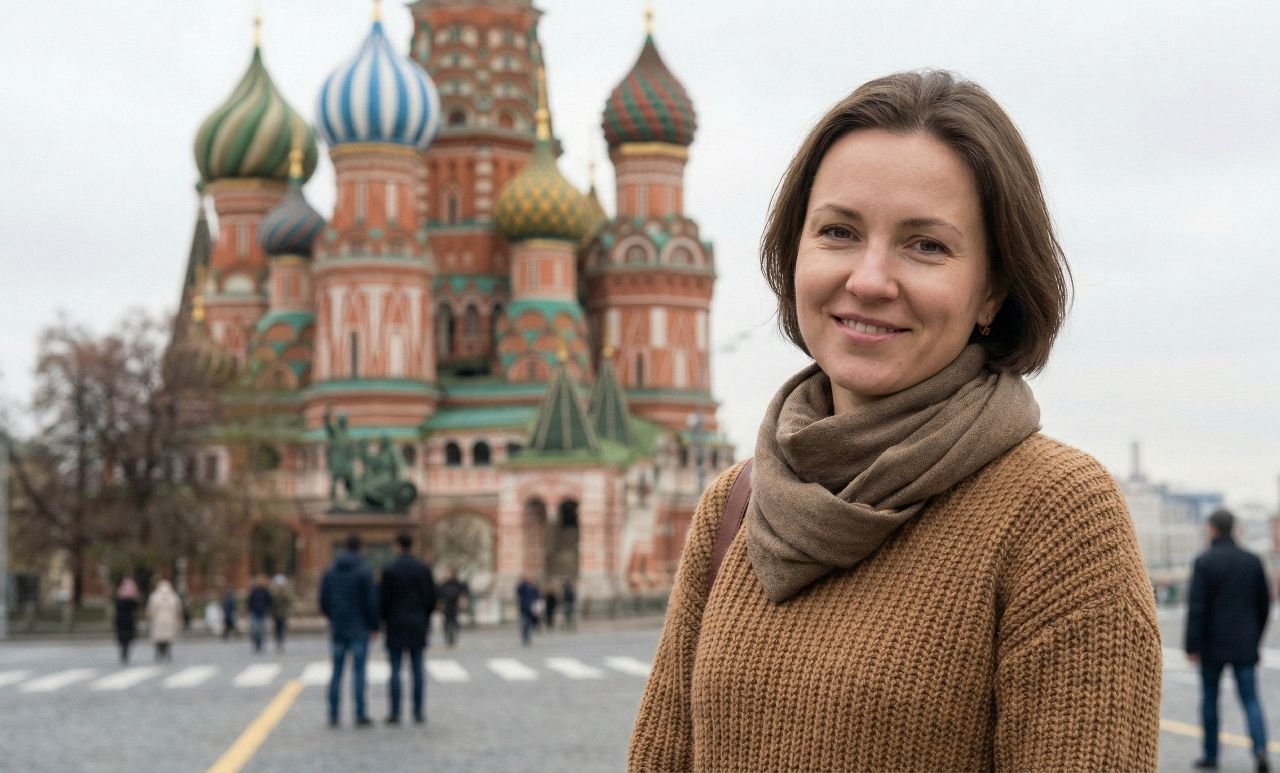
Anastasia is a Moscow-based travel blog writer who brings a local’s insight to one of the world’s most fascinating and misunderstood cities. Born and raised in Moscow, Russia, Anastasia shares an authentic, on-the-ground perspective on what it’s really like to explore the city beyond the postcards.
Her writing focuses on tourism in Moscow, practical guides for first-time visitors, and hidden corners that most travelers miss. In addition, Anastasia writes extensively about expat life in Moscow, covering everyday realities such as housing, transportation, cultural differences, and settling into life in the Russian capital.
As a solo traveler in her own city, she also documents Moscow through the lens of independence and curiosity — from navigating the metro alone at night to discovering cafés, museums, and neighborhoods that feel welcoming for solo visitors. Her work blends local knowledge with honest personal experience, helping travelers and expats alike feel more confident, informed, and inspired when discovering Moscow on their own terms.