
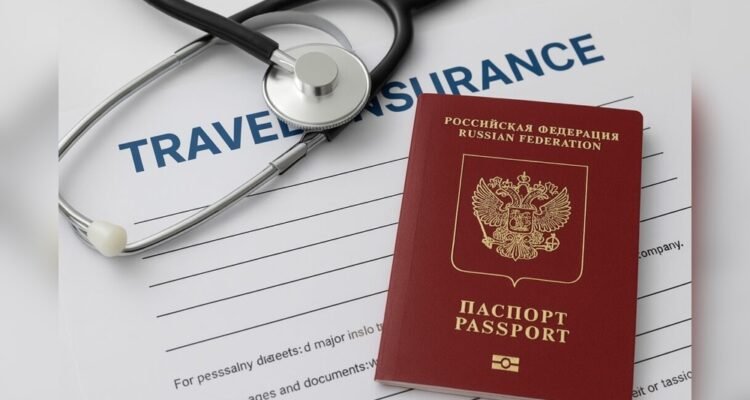
Yes — and not just as a good idea. Travel insurance is a formal requirement of a standard Russian tourist visa, and given that Western bank cards don’t work here, it’s genuinely sensible to have regardless.
The tricky part in 2026 isn’t whether you need it, it’s finding a policy that actually qualifies. Most major Western insurers have quietly stopped covering Russia since the sanctions that followed 2022, even on policies still marketed as “worldwide.”
Why your usual travel insurer probably won’t cover you
Since 2022, most major Western insurers have added Russia to their exclusion lists, even on policies marketed as worldwide coverage. This isn’t always obvious from the product page: a policy can say “worldwide” on the certificate while its terms exclude any country subject to EU, UK or US sanctions, which removes Russia without naming it directly. If you already hold annual travel insurance, don’t assume it covers a Russia trip — check the policy wording specifically for the Russian Federation. A credit card’s built-in travel cover almost always carries the same exclusion.
What the visa application actually requires
A standard Russian tourist visa requires proof of medical insurance, typically a minimum of 30,000 euros in coverage, with the Russian Federation explicitly named as covered territory. The policy needs to be valid for your full stay and presented in Russian or English. Consulates have rejected applications over insurance that technically claims worldwide cover but doesn’t name Russia specifically, so this is worth getting right before you submit anything.

Where that leaves you
A small number of specialist insurers, including some Russian companies and a handful of international providers that have specifically kept Russia on their books, still offer visa-compliant policies. Russian insurers generally provide the most straightforward coverage once you’re in the country, though many are built around domestic payment methods rather than foreign cards, so check the payment process before committing. Whichever provider you choose, verify three things on the certificate itself before applying for your visa: the Russian Federation is named as covered territory, the minimum coverage meets your consulate’s requirement, and the policy dates cover your entire trip.
A note on how fast this changes
Which insurers cover Russia has shifted more than once since 2022, and sanctions can affect a provider’s ability to operate here with little notice. Don’t buy insurance far in advance of your trip assuming today’s options will still exist — check again close to your travel dates, and carry both a digital and printed copy of your policy, since border officials may ask to see it.
Frequently Asked Questions
Do you need travel insurance for Russia?
Yes, it’s a formal requirement of a standard tourist visa. Your policy needs to name the Russian Federation as covered territory, not just claim “worldwide” cover.
Will my usual travel insurer cover me?
Probably not. Most major Western insurers, including familiar big names, have excluded Russia since 2022 due to sanctions, even on plans that still say “worldwide” on the label. Check the policy wording directly rather than assuming.
How much coverage does the visa require?
Typically a minimum of 30,000 euros in medical coverage, with the Russian Federation explicitly named, valid for your full stay.
Anastasia is a Moscow-based travel blog writer who brings a local’s insight to one of the world’s most fascinating and misunderstood cities. Born and raised in Moscow, Russia, Anastasia shares an authentic, on-the-ground perspective on what it’s really like to explore the city beyond the postcards.
Her writing focuses on tourism in Moscow, practical guides for first-time visitors, and hidden corners that most travelers miss. In addition, Anastasia writes extensively about expat life in Moscow, covering everyday realities such as housing, transportation, cultural differences, and settling into life in the Russian capital.
As a solo traveler in her own city, she also documents Moscow through the lens of independence and curiosity — from navigating the metro alone at night to discovering cafés, museums, and neighborhoods that feel welcoming for solo visitors. Her work blends local knowledge with honest personal experience, helping travelers and expats alike feel more confident, informed, and inspired when discovering Moscow on their own terms.