

There’s a rule in Moscow that if I stay for more than 7 business days I must register my stay with migration authorities, and you must too; failure can lead to fines or deportation. I find it helpful that many hotels and hosts will register you on arrival, but you can also register at the local migration office or post office to keep your stay legal and stress-free.
Understanding the Types of Registrations
| Who needs it | Foreigners staying >7 working days, Russian citizens changing residence, holders of a residence permit |
| Deadline | Temporary registration: within 7 working days of arrival; Permanent registration: when you obtain citizenship or a residence permit, or change your primary address |
| Validity | Temporary registration is tied to your visa/allowed stay; Permanent registration is indefinite for citizens and residence-permit holders |
| Who registers | Hotels or hosts typically register temporary stays; for permanent registration you apply at the local registry or MFC with owner consent |
| Consequences | Hosts risk administrative fines (often up to 5,000 RUB) for late or missing notifications; foreigners can face deportation or entry bans in serious cases |
- Passport with visa or migration status
- Migration card
- Lease agreement or hotel confirmation (host provides registration)
Temporary Registration
I normally tell people that temporary registration is the most common issue for digital nomads: you must register within 7 working days of arrival if you plan to stay longer than that. Hotels will take care of this for you automatically; if you stay with a private landlord they must submit your details to the migration authorities or file via the post office/MFC, and you should provide your passport, visa and migration card.
In my experience the process takes between 1-3 business days when the host cooperates, and failure to register can lead to administrative fines for the host (commonly up to 5,000 RUB) or complications for you at border control. If you want an example, I once registered through an MFC in central Moscow and it was processed in two business days after the landlord uploaded the lease and my passport scan.
Permanent Registration
I found that permanent registration (often called propiska historically) is relevant mostly if you obtain Russian citizenship or a residence permit; it confers long-term benefits like easier enrollment for local services, healthcare access, and voting rights for citizens. Typically you submit an application at the local registration office or MFC with proof of ownership or a notarized consent from the property owner, plus your passport and other ID documents.

One practical note: processing times vary by district-some offices complete the change within a week, others may take up to 30 days-and you should expect to show original documents in person. I changed my permanent registration after buying an apartment and the local registry processed it in 10 days once all documents were submitted; having the owner’s certificate and your passport ready speeds things up and reduces the chance of being asked to return with corrections.
The process to change or obtain permanent registration can take up to 30 days, requires owner consent or proof of ownership, and is generally available to citizens and residence-permit holders rather than short-term visitors.
Key Factors to Consider
I focus on practical details that affect whether you need to register: migration registration in Moscow is typically required within 7 working days of arrival if you stay longer than that, hotels and official short-term rentals register guests automatically, and private hosts must register you through the post office or GUVM. I’ve seen colleagues fined for skipping this step-fines usually fall around 2,000-5,000 RUB-and the administrative process needs your passport and migration card.
My experience tells me the other big variables are your visa status and who you work for. I’ve worked remotely for a US company while physically in Moscow without a Russian work permit and encountered no immediate enforcement, yet taking paid work from Russian clients or signing local contracts changes the legal picture and can trigger tax or permit requirements.
- digital nomads: often travel on tourist visas but face legal gray areas
- registration: required within 7 working days for stays beyond that
- Moscow: local police/GUVM administer registration and enforcement
- work permit: needed for employment with Russian employers
Length of Stay
I check length-of-stay rules before booking because if I remain beyond the initial window I must register; in Moscow that commonly means action within 7 working days of arrival for visitors staying longer. I’ve had friends on 10-30 day trips who didn’t need registration only because their total stay stayed under the threshold, while those staying 30-90 days had to complete migration registration through their host or a service.
When I consider extending a trip, I weigh the risk of overstaying: fines around 2,000-5,000 RUB are typical, and repeated or serious violations can lead to deportation or temporary entry bans. I track dates carefully and renew or exit the country before any breach, because administrative penalties are easy to avoid with timely registration.
Work Situation
I treat working remotely for a foreign company differently from taking Russian clients. If you do remote work for a non-Russian employer and receive payment outside Russia, many expats operate on tourist or business visas without a permit-this remains a gray area but is commonly tolerated. When I started contracting for a Moscow-based business, I discovered that invoicing locally or signing a local employment contract usually requires a work permit and local tax registration.
I advise documenting your income streams: I keep contracts and invoices that show foreign payment flows when clients are outside Russia, and I consult a local lawyer before accepting work tied to Russian entities. Practical examples: freelancers invoicing EU or US clients faced fewer complications, whereas those delivering services to Russian companies were advised to obtain appropriate permits or set up a legal entity.
Thou should prioritize getting written confirmation from an employer or host about who will handle migration registration, and if you plan to work for Russian clients I recommend securing a work permit or formal legal advice to avoid fines, deportation, or entry bans.
Pros and Cons of Registering
Registration: Pros vs Cons
| Pros | Cons |
|---|---|
| Legal cover for stays over 7 working days (required by migration rules) | Extra paperwork and time-registration must be done within the prescribed period |
| Helps avoid fines or administrative action (commonly cited fines around 2,000-5,000 RUB) | Potential privacy concerns: personal data shared with authorities and landlords |
| Makes visa extensions, migration procedures and official appointments smoother | Some hosts or landlords charge a fee or refuse to register short-term guests |
| Enables opening a bank account, getting certain SIM services and receiving official mail | Repeated moves require re-registration or notifications, adding admin overhead |
| Hotels usually register guests automatically, simplifying compliance | Private rentals can lead to disputes if ownership/permission to register is unclear |
| Provides a proof-of-residence record useful for long-term planning | Visible registration can attract extra scrutiny if you work or run a business |
| Reduces risk of deportation or being denied entry on future visits | Temporary stays under a week often make registration unnecessary and burdensome |
Benefits of Registration
I found that registering quickly in Moscow removes a lot of friction: authorities expect foreign nationals to register within 7 working days, and having that paper on hand made a visa extension appointment and a bank account opening go through without delays. When I stayed in hotels they handled the process automatically, and in a private flat my landlord submitted the paperwork-this saved me time and avoided the small fines other travellers reported.
If you plan to stay longer or want to access services like a Russian bank card, a local SIM tied to your passport, or official medical care, registration becomes practical. For example, I needed registration to receive official mail for a couriered document and to sign a longer-term coworking contract; those uses add up and make the administrative step worthwhile for extended stays.
Potential Drawbacks
I’ve also run into the downsides: registering can feel bureaucratic and slow, especially if the landlord is unfamiliar with the process or charges an extra fee to file on your behalf. In one case I saw a host ask for a small service payment (a few thousand rubles) to complete temporary registration-so budget for possible costs when you book private accommodation.
Another issue is privacy and visibility: registering links your presence to a physical address in official records, which may not be ideal if you value low-profile travel. I once had to explain my situation at a migration desk because my registration form listed a building owner who had since moved, which added a day of hassle to my schedule.
When weighing these drawbacks I consider how long I’ll stay and what services I need; for short trips under a week I usually avoid the hassle, but for anything over a month I accept the paperwork to avoid fines, administrative blocks, or problems extending a visa.
Practical Tips for Digital Nomads
I pack a set of photocopies and scanned backups of my passport, visa and migration card, and keep them in the cloud so I can share them if a host or official asks. If you plan to stay more than a few days, check whether your accommodation offers registration services – many hotels and short-term rentals will handle the paperwork for a small fee (typically 300-1,500 RUB) and register your stay with the local authorities. When I arrive, I confirm the exact Russian-format address and the host’s contact details in writing; that often speeds up any interaction with the local authorities.
I carry a printed copy of my address in Russian, an appointment confirmation from gosuslugi.ru when applicable, and a note of the nearest migration office hours. For digital nomads in Moscow it’s common to book an appointment online to avoid multi-hour queues – some offices show waits of several hours without one. I also keep a small amount of cash on hand for service fees and transport, since some private hosts prefer cash for registration services. Knowing how to document and delegate the register process cuts stress and keeps your trip running smoothly.
- Digital nomads: scan passport, visa, migration card; store in two cloud locations
- Get the full accommodation address in Cyrillic and the host’s passport/registration proof
- Book migration office appointments via gosuslugi.ru where possible to reduce wait times
- Budget for service fees (typical range 300-1,500 RUB) if your host or hotel handles registration
- Carry printed documents and confirmation receipts from any registration submission
Preparing for Your Visit
I choose places that explicitly state they will provide registration for foreign guests; platforms and listings often note this in the amenities. Before I book, I ask the host whether they will register me and whether they charge a fee; if they do, I request a receipt. For planning, I allow at least one business day after arrival to complete formalities and factor in a potential visit to a local office or to meet a host who will deliver the registration stamp.
When traveling to Moscow I download the gosuslugi app and save the migration office locations near my stay – some districts have dedicated offices that process registrations faster. I also prepare a Russian-language note with my arrival/departure dates and the address, and I photocopy the page of my passport with entry stamp and the migration card; this setup has helped me avoid repeated trips and unexpected delays.
Dealing with Local Authorities
I always bring original documents plus two sets of copies to any appointment with local authorities and I arrive at least 15 minutes early. At the counter I ask for the precise name of the form they will issue and request a stamped receipt; having that stamped paper has solved disputes for other digital nomads I know who later left the country. If an officer asks for additional evidence (a lease, host ID, or utility bill), I hand over the host’s written confirmation and a translation of the address in Russian.
If the office is busy, I check whether I can leave documents with a staff member and pick them up later; some Moscow offices accept drop-offs and return a stamped copy within 24-48 hours. In cases where language is a barrier I bring a short Russian script explaining my situation and contact details for my host, and I use a translation app to read back what an official says so I can confirm understanding.
For more complex situations – lost migration cards, contested registration, or requests for unexpected fees – I contact my host and, if needed, the consular section of my embassy; they can provide guidance and sometimes a template letter. If you face pushback, keep copies of all receipts and communications, and ask for written clarification from the office; failure to produce registration documents can lead to fines or temporary complications, so I treat these steps as priority tasks.
Step-by-Step Registration Process
Registration in Moscow normally needs to be done within 7 working days of your arrival if you plan to stay longer than that, and the fastest routes are usually through a hotel front desk, a post office service, or the local migration office. I use the hotel route when possible because many hotels handle registration automatically and provide a stamped confirmation the same day; if you’re staying in a private flat you’ll need the landlord’s signed confirmation or a rental agreement.
To avoid delays bring originals and copies, and save scanned PDFs on your phone and cloud storage so you can email them if required. For visa details that often affect what you must present, check the Russia Visa Guide for Digital Nomads – Geronimo which outlines common visa types and entry requirements relevant to digital nomads.
Registration Checklist
| Step | What to bring / Tip |
| 1. Gather documents | Passport (original + copy), visa, migration card, address confirmation (hotel confirmation or rental agreement), 1-2 passport photos and digital scans. |
| 2. Choose registration channel | Hotel front desk (fastest), post office service, or local UVM/migration office if landlord cannot register you. |
| 3. Submit & sign | Hand over documents, complete the registration form, sign where required; expect same-day processing or up to a few business days in busy periods. |
| 4. Keep proof | Receive stamped registration confirmation (paper or electronic); keep the original until after you leave Russia. |
Gathering Necessary Documents
I always prepare the original passport, visa page, and the migration card received on entry, plus two photocopies of each; having digital scans accessible speeds things up if a desk agent asks to email them. You should also bring a printed address confirmation-hotels give this automatically, while a private apartment requires a signed rental agreement or a notarized invitation from the host in some cases.
Photos are sometimes requested, so I carry two passport-size pictures and keep them with my documents. If your stay changes, keep updated copies: for example, switching apartments mid-stay typically means you’ll need the new landlord’s confirmation to re-register.
Completing the Registration
When I register I go to the hotel desk or the chosen office, hand over the documents, and sign the registration form-agents then attach a stamp to the migration card or issue a printed certificate; processing is often same-day but can take up to a few business days during peak times. If you use the local migration office (UVM), expect to queue and present originals, so plan at least half a day.
If your host can’t register you in person you’ll likely need to visit the migration office with a notarized authorization from them or a formal rental contract, and failure to register can lead to fines and complications when exiting the country. I advise verifying the registration stamp immediately: check your name, passport number, and address for any typos before you leave the desk.
More practically, some districts in Moscow offer partial online submission or third-party services, but I rely on physical confirmation: a stamped migration card or printed certificate stays with your passport and is what immigration officials will ask for, so keep duplicates and email backups until you’ve departed.
Resources for Further Information
Local Government Websites
I rely on the Moscow government portal (mos.ru) and the national services portal (gosuslugi.ru) for the most up-to-date procedural details, downloadable forms and appointment booking; these sites show which documents are required for registration, the contact details for local migration offices and often the expected processing times. On the federal side I check the Ministry of Internal Affairs migration pages and the MFA (mid.ru) for visa-policy updates – from my experience the practical differences are: hotels and official accommodations handle registration on check‑in, while private-host registrations are expected within 7 working days of arrival (check the specific page for your visa type and locale).
I use those sites to save official PDFs and screenshots before I visit any office, and you can book many appointments online to avoid long queues; mos.ru in particular lists local office hours and services in English for major requests. If you need precise fee amounts, processing times or the exact wording of a registration stamp, the government pages are the authoritative source and will usually list the phone and email contacts for follow‑up.
Community Forums and Groups
I follow several community channels when rules change faster than official pages get updated – for visa discussion see the Quora thread What visa options are suitable for a digital nomad looking to reside in Russia for approximately a year, and I also monitor expat.ru, the “Expats in Moscow” Facebook group and a mix of Telegram channels and subreddits for day‑to‑day tips. These groups often have thousands of members who post recent experiences (step‑by‑step registration walkthroughs, office wait times, and contact details for local translators or legal advisers).
Community threads are where I find practical templates and examples – for instance, members commonly share a sample registration notice text, screenshots of completed forms, and case studies such as someone converting a tourist visa into a longer stay using a private invitation or employer sponsorship. Those real cases give you concrete numbers (typical processing windows of a few days to a couple of weeks) and procedural workarounds that I’ve used myself to plan timelines.
I always cross‑check any crowd‑sourced advice against official pages before acting, because while forums are fast they can include outdated or unsafe recommendations; beware of paid “registration” services that promise shortcuts or offer to produce documents for cash, and if something sounds too easy I verify it with an official office or a licensed migration lawyer. When I need final confirmation I contact the listed phone or email on the government page and keep records (screenshots, emails) of any official responses.
Final Words
With this in mind I would say that whether you need to register in Moscow depends on your visa type and length of stay: if you plan to remain more than seven business days or hold a long‑stay or work visa you will generally need to register with local authorities or via your host, while very short tourist visits or certain visa‑free arrangements may be exempt. I find it helpful to verify the exact timeline tied to your passport and permit because enforcement and procedures can vary.
If you want to be safe I recommend you check the rules before travel and keep copies of any registration paperwork; for specifics about work visas and sponsorship options you can review Russia Work Permits & Visas: Types & How to Sponsor, and I suggest contacting a migration specialist or your employer to handle formal registration so you can focus on your work and your stay.
FAQ
Q: Do digital nomads need to register with local authorities in Moscow?
A: Yes-most foreign visitors (including digital nomads) must be registered at their place of stay in Russia within seven working days of arrival. Hotels and other hotels/apartments that operate legally will usually submit the registration on your behalf; if you stay in a private apartment the host or you must notify the migration authorities. Short stays under seven working days typically do not require formal registration, but the seven-day rule is the standard one to follow.
Q: How do I complete registration in Moscow and what documents are required?
A: Registration can be done by the hotel, a private host, at a GUVM (migration) office or in many cases at a Russian post office (Pochta Rossii) that accepts migration notifications. You will normally need your passport, entry visa (if applicable) and the migration card issued on arrival. If registering at the post office or migration office you may also need a rental agreement or a written invitation from the host; the host’s passport details are often required for private accommodation. Official registration itself is generally free when performed by the host or the migration office, though private agencies will charge service fees.
Q: Does registration allow me to work remotely in Russia, and are there tax or legal risks for digital nomads?
A: Registration is an administrative requirement and does not replace a work permit or work visa. Russia does not offer a specific digital nomad visa; working for a Russian employer requires proper work authorization, and using a tourist visa to take up formal employment can lead to penalties. Remote work for a foreign employer while physically in Russia is a legal gray area-enforcement varies-but you should be aware that staying in Russia for 183 days or more in a 12‑month period can trigger Russian tax residency and tax obligations on worldwide income. Failure to register or to comply with visa/work rules can result in fines, administrative measures or restrictions on future entry. Consulting an immigration and tax advisor before and during an extended stay is advisable.
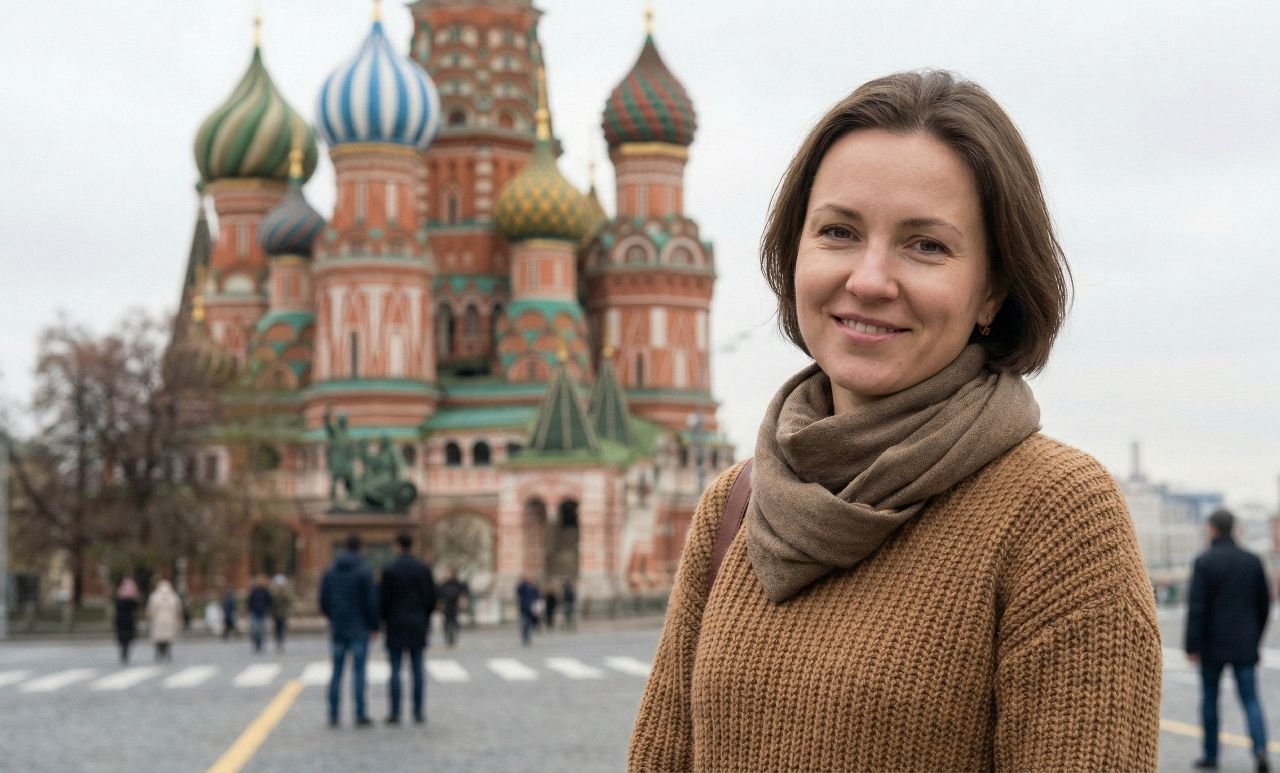
Anastasia is a Moscow-based travel blog writer who brings a local’s insight to one of the world’s most fascinating and misunderstood cities. Born and raised in Moscow, Russia, Anastasia shares an authentic, on-the-ground perspective on what it’s really like to explore the city beyond the postcards.
Her writing focuses on tourism in Moscow, practical guides for first-time visitors, and hidden corners that most travelers miss. In addition, Anastasia writes extensively about expat life in Moscow, covering everyday realities such as housing, transportation, cultural differences, and settling into life in the Russian capital.
As a solo traveler in her own city, she also documents Moscow through the lens of independence and curiosity — from navigating the metro alone at night to discovering cafés, museums, and neighborhoods that feel welcoming for solo visitors. Her work blends local knowledge with honest personal experience, helping travelers and expats alike feel more confident, informed, and inspired when discovering Moscow on their own terms.