

nomads should note that if I or you stay in Russia more than 183 days in a 12-month period you become a tax resident and are taxed on your worldwide income at resident rates (generally 13%-15%), while non-residents face higher rates on Russian-source pay, often ~30%; failing to declare can trigger penalties and back taxes, so I recommend keeping travel records, checking any double taxation treaty and consulting a local accountant to protect your finances.
Understanding Tax Rules for Digital Nomads
Types of Taxes Applicable
I cover the main levies you’ll face while living and working in Moscow: for most residents personal income tax is a flat 13%, with a top rate of 15% on annual income over 5,000,000 ₽; if you stay non‑resident you’ll typically see a 30% withholding on Russian‑source income. I also track how payroll is usually withheld by employers, while freelancers and contractors must monitor their own receipts and file returns when required.
| Tax type | Key point |
| Income tax | Residents taxed on worldwide income at 13% (15% over 5,000,000 ₽); non‑residents taxed at 30% on Russian‑source income. |
| Social contributions | Employer contributions roughly ~30% (caps apply); self‑employed can use the professional income regime (NPD) at 4%/6% in many cases. |
| VAT | Standard rate is 20% on goods and services, with reduced/exempt categories for some items. |
| Property & local taxes | Municipal rates for real estate and vehicles vary; typically small annual percentages set by local authorities. |
- Income tax
- Withholding
- Social contributions
- VAT
- Property tax
I recommend you keep detailed records of invoicing, contracts and days in/out of Russia because local treatment depends on status and source of income. Recognizing how each levy interacts (for example, when payroll withholding covers your income tax but not social contributions) will help you decide whether to register, use NPD, or claim treaty relief.
Tax Residency in Moscow
For residency I follow the standard rule: if you spend at least 183 days in Russia within any consecutive 12‑month period you become a tax resident and are taxed on your worldwide income. I point out that the day count is cumulative across months, so short repeated stays add up; as a resident you’ll generally be liable to the 13% / 15% regime on global earnings unless a double tax treaty provides relief.

I also take practical steps: register for an INN (taxpayer number) with the Federal Tax Service if you expect to stay or file returns, and track receipts for foreign income you may need to declare. If you’re claiming treaty benefits you should gather employer confirmations, proof of taxes paid abroad, and a travel log-these documents often matter in audits or when applying foreign tax credits.
In one case I handled a remote consultant who arrived for 200 days and became resident; she moved from a foreign withholding of tax to filing 3‑NDFL in Russia and ultimately used a treaty credit to avoid double taxation, while switching some local gigs to the NPD regime at 4%/6% to reduce administrative burden-so I advise planning your stays and registration well ahead of crossing the 183‑day threshold.
Tips for Managing Your Taxes
I track days, income sources and contracts closely because the 183 days test determines Russian tax residency; if you exceed that in any 12‑month window you become a tax resident and face the resident rates (generally 13%, rising to 15% over 5,000,000 RUB), while non‑residents often face a 30% rate on Russian‑source income. I separate personal and business finances, use a dedicated account for client payments, and run monthly reconciliations so I can spot withheld tax errors or incorrect residency withholding before they compound.
- Keep a dated travel log with entry/exit stamps and GPS summaries to prove days in Moscow.
- Store invoices and contracts showing client location and payment routing when you’re claiming non‑Russian source income as a digital nomad.
- Use cloud accounting (OCR scans + backups) so you can hand over a tidy file if the FNS opens an inquiry.
Keeping Accurate Records
I keep copies of every invoice, bank statement and accommodation receipt for at least four years because the typical tax audit window in Russia covers the prior three years and having an extra year of documentation has helped me resolve timing disputes. For example, when I had 198 days in Moscow one year, my stamped passport pages plus arrival/departure screenshots from my airline bookings resolved a residency question without needing a paid consultant.
I scan originals daily, tag each file with client country and income type, and export quarterly P&L reports so you can show the FNS clean source allocation between Russian and foreign income. If you run an individual entrepreneur (IP) or a small Russian company, I recommend keeping separate ledgers for payroll, contractor fees and VATable receipts to avoid mixing personal and business expenses.
Utilizing Tax Treaties
I check bilateral agreements because Russia’s double tax treaties can reduce withholding and prevent double taxation-many treaties can cut withholding from 30% down to as low as 0-15% depending on whether the income is dividends, interest or royalties. For practical use I obtain a certificate of tax residency from my home country (often required within the last 12 months), provide it to the Russian payer, and keep a translated copy for the file; that simple step has lowered withholding on cross‑border consulting fees in my case.
I also watch tie‑breaker rules: if two countries claim you as resident, the treaty’s tie‑breaker tests (permanent home, centre of vital interests, habitual abode) decide who gets primary taxing rights, and failing the factual test can leave you taxed twice. When I’ve faced ambiguous cases I file for a foreign tax credit in my home jurisdiction while simultaneously applying treaty relief in Russia, documenting timelines and communications to strengthen my position.
Thou must retain originals of residency certificates, stamped travel records and translated contracts so you can produce them promptly during any inquiry.
Step-by-Step Process for Filing Taxes
Step-by-Step Checklist
| Step | Action / Details |
|---|---|
| Determine residency | I check the 183‑day rule over any rolling 12 months; if you meet it you’re generally taxed as a resident (standard rate applies), if not you’re a non‑resident (higher withholding rates on some income). |
| Gather documents | I collect passports, INN, bank statements, contracts/invoices, proof of days in/out of Russia (boarding passes, entry/exit stamps) and receipts for any deductible expenses. |
| Convert and calculate | I report income in rubles using the Central Bank rate on the payment date and total annual income to prepare the 3‑NDFL or online declaration. |
| File the declaration | I use nalog.ru (personal account) to submit the 3‑NDFL electronically or deliver a paper return at the tax office if needed; some income withheld at source doesn’t require a full return. |
| Pay tax | I pay by the statutory deadline (file by 30 April of the year after the tax year; payment due by 15 July) or arrange instalments if allowed by the tax office. |
| Keep records | I keep digital copies of all supporting documents and proof of submission in case of audit or questions from the tax inspectorate. |
Preparing Your Tax Documents
I gather all income evidence first: bank statements showing receipts, signed contracts or invoices, and screenshots of payments when transfers are irregular. For foreign currency I convert each receipt at the Central Bank of Russia rate on the date the payment arrived; that’s how I build the ruble totals for the 3‑NDFL.
I make sure you also have proof of physical presence in Russia (passport entry/exit stamps, boarding passes, rental receipts) because the 183‑day calculation often makes the biggest difference in what you owe. If I’ve paid business expenses, I keep contracts and receipts separately and label which are deductible so I can attach clear explanations when I file.
Understanding Deadlines
I treat the Russian tax year as the calendar year and plan filings accordingly: I submit the 3‑NDFL by 30 April following the reporting year and pay any resulting tax by 15 July. If you only have employment income taxed at source you often won’t need to file, but freelancing and foreign income usually trigger the declaration and payment dates above.
I’m careful about late submission because it can trigger fines and interest from the tax office; keeping electronic proof of submission and payment timestamps helps if there’s a dispute. For example, if I earned freelance income in 2024 I’ll file the return by 30 April 2025 and arrange payment by 15 July 2025 to avoid penalties.
I also use nalog.ru and set calendar alerts so I don’t miss the windows; electronic filing speeds processing and gives you an immediate confirmation number, which I keep together with the scanned documents. If you’re unsure whether a payer withheld tax at source, I check payment contracts and ask the payer before assuming you don’t need to file.
Factors Influencing Tax Obligations
- 183-day rule
- tax residency
- 13% tax on worldwide income
- 15% on income above 5,000,000 RUB
- 30% non-resident rate
- double taxation treaty
- income sourcing
- self-employment / registration
Income Sources
I focus on how the origin of your earnings changes tax exposure: if you provide services while physically present in Moscow, the Russian tax authority routinely treats that work as Russian-sourced income, potentially taxable here even when your clients are abroad. For example, when you invoice a U.S. company but perform the work from an apartment in Moscow, you could be treated as earning Russian-sourced employment or service income and face withholding or reporting requirements at the non-resident or resident rates depending on your status.
I also point out distinctions for different business forms: wages paid by a Russian employer, freelance fees, and payments routed through foreign companies are treated differently for withholding and reporting. If you register as an individual entrepreneur or use the professional income regime, tax rates and reporting change – under the Nalog na Professionalnuyu Deyatelnost many taxpayers pay 4% from individuals or 6% from legal entities on qualifying receipts – while residents face the standard 13% (and 15% above 5,000,000 RUB) on worldwide income and non-residents often see higher withholding, commonly around 30%, on Russian-sourced amounts.
Duration of Stay
I check the 183-day rule first: spending more than 183 days in any 12-month period usually makes you a Russian tax resident, which triggers taxation on your worldwide income. For a concrete example, staying in Moscow from January 1 to July 4 (185 days) would commonly qualify you as a resident, meaning you’d be subject to the resident tax rates and required to file annual returns covering foreign and domestic earnings.
I also watch how short repeated trips or mixed itineraries affect counting: days are aggregated on a rolling 12-month basis, so intermittent stays adding to 183+ days across different visits still count. In practice, I’ve seen nomads who split time between Moscow and another country unintentionally cross the threshold and then had to file returns and claim foreign tax credits under a bilateral double taxation treaty to avoid being taxed twice.
This last point matters because if you cross the threshold unexpectedly, you may face retroactive filing obligations, and you should assess both withholding exposures during the year and treaty relief options promptly.
Pros and Cons of Living as a Digital Nomad in Moscow
Pros vs Cons – quick comparison
| Pros | Cons |
|---|---|
| I get very fast, reliable internet across central districts (common fiber 100-500 Mbps) and hundreds of coworking spaces; daily coworking rates often run ≈400-1,500 RUB (~$5-$20). | Your paperwork for local providers or contracts can require Russian ID or registration, which makes simple setups harder if you’re only on a tourist visa. |
| I can enjoy rich cultural life and nightlife, with museums, theatres and events; Moscow Metro serves ~6 million riders daily and makes getting around efficient. | Central rents are high – a 1BR in the city center typically costs ≈60,000-120,000 RUB/month (~$700-$1,400), so your budget can be tighter than in smaller nomad hubs. |
| I benefit from strong international flight links (Sheremetyevo/Domodedovo) – direct flights to major European cities in ~2-4 hours. | Sanctions and route adjustments have occasionally disrupted travel options and payment channels; you may need contingency plans for flights and banking. |
| I find active expat and startup communities, meetups and English-friendly coworkings where you can network and find clients fast. | Tax and immigration forms are typically in Russian; your interactions with authorities often require a translator or a local accountant. |
| I can sometimes benefit from low resident tax rates compared with my home country – the standard resident personal income tax rate is 13%. | If you stay >183 days in a 12‑month period you become a tax resident under Russian rules and must declare worldwide income, which can be administratively heavy. |
| I can use double tax treaties (Russia has DTAs with many countries) to reduce or eliminate double taxation if I handle paperwork correctly. | Non‑resident sourced employment income is taxed at 30%, and misclassification between resident/non‑resident status can create unexpected liabilities. |
| I can hire local accountants affordably – basic tax help and registration services are often cheaper than in Western Europe. | Failure to file or late filing can trigger fines, interest and audits; penalties and back taxes can substantially raise your cost of staying. |
| I benefit from high-quality healthcare clinics, gyms and a wide choice of international services in central Moscow. | Your visa type and registration rules (migration card, registration at place of stay) add bureaucratic steps that you must track closely to avoid fines or complications. |
Pros: Opportunities and Lifestyle
I enjoy a metropolitan lifestyle that combines reliable infrastructure with abundant workspaces and social options. Coworkings and cafes with solid Wi‑Fi are everywhere in central Moscow, and I can usually find a desk for the day for ≈400-1,500 RUB; that makes it easy to work across different neighborhoods without long-term office commitments. Museums, concerts and a lively restaurant scene mean I can balance focused work weeks with rich cultural weekends.
When I factor travel, Moscow’s airports give me regular connections across Europe and Asia – a weekend trip to Berlin or Istanbul is feasible in one afternoon. For daily life, the metro and public transport are efficient and affordable, so I can keep living costs reasonable compared with Western capitals if I choose neighborhoods outside the most expensive central ring.
Cons: Tax Compliance Challenges
I need to watch my presence carefully because Russia applies the 183‑day rule: if you spend more than 183 days in any consecutive 12 months you’re typically treated as a Russian tax resident and taxed at 13% on worldwide income. That means if you receive salary or freelance income from abroad while physically in Moscow, you may have to file the annual 3‑NDFL return and report foreign earnings – a process that’s more involved than simple employer withholding.
When I’m non‑resident, I face the opposite risk: Russian‑source employment income is taxed at 30%, so clients or platforms that classify payments as Russia‑sourced can create high tax bills. On top of rates, dealing with declarations, local bank documentation (INN), and possible audits forces me to use a local accountant; otherwise I expose myself to fines, interest and administrative headaches.
To give a practical example, I’ve seen nomads inadvertently trigger residency by accumulating multi‑month stays across calendar boundaries and then discover they must file for prior years – resolving that can involve back taxes plus penalties and several months of paperwork, so I always track travel days and keep copies of entry/exit stamps and contracts. Strongly consider engaging a specialist early: small timing errors can become expensive.
Resources for Digital Nomads in Moscow
I rely on a mix of professional advisors and active online communities to keep my tax position in Moscow clear. If you want quick perspectives from other nomads who have navigated the 183‑day rule, the 13% resident vs 30% non‑resident tax rates, and the practical steps for declaring income, check discussions like Reducing tax load while not beeing in no mams land for examples of real cases and strategies people have tried.
Be aware that forum advice can be helpful but not definitive; I always cross‑check any plan against a licensed accountant because back taxes and penalties can quickly outweigh any informal savings.
Trusted Local Advisors
I use a tax attorney for residency questions and a bilingual accountant for monthly filings; typical one‑off consultations run from about 10,000-25,000 RUB, while ongoing bookkeeping often costs around 7,000-20,000 RUB per month depending on volume. When I needed to confirm my status under the 183‑day test, my attorney reviewed entry/exit stamps and employment contracts, prepared a formal residency statement, and estimated prospective tax liability under both resident and non‑resident rules.
When you choose an advisor, I recommend asking for client case studies and written deliverables (e.g., an action plan, filings to be submitted, estimated deadlines). I found that firms familiar with expat issues and double tax treaty provisions saved me time; in one case they helped reclaim withholding tax under a treaty, reducing an initial 30% withholding to the 13% rate applicable under documented residency.
Online Communities and Forums
I follow Reddit threads, Telegram channels, and Moscow coworking group pages to spot practical tips, short‑term workarounds, and warnings about common pitfalls. For example, community threads often list accountant referrals, recent experiences with the Federal Tax Service, and step‑by‑step posts showing how others documented days in and out of Russia to support a residency claim. Use these communities for leads and real examples, but always verify technical advice with a professional.
In my experience, responses on Reddit and Telegram vary in depth: simple questions get answers within hours, while detailed tax scenarios usually trigger requests for screenshots or summaries from users who then point to specific regulations or contact details for specialists.
For best results I archive useful threads, note dates and names of advisors mentioned, and follow up directly-that way you turn community intelligence into actionable next steps rather than relying on unverified tips alone.
Summing up
With this in mind, I tell you that tax residency in Russia is mainly determined by days of physical presence (generally 183 days in any 12‑month period), so if you become a tax resident in Moscow you’ll typically be taxed on your worldwide income under Russian personal income tax rules (commonly 13% for most resident income, with a higher rate applying to very high incomes); if you remain a nonresident you’re usually taxed at higher rates on Russian‑source income. I also note that freelancing, working through Russian clients or local employers triggers withholding and social contribution obligations, while special small business or self‑employed regimes can change your effective rate-so your situation can vary by contract type and registration choices.
I recommend you keep good records, register with the tax authorities if your stay and activities require it, and consult a local tax advisor; if you’re a US citizen you still need to file US returns and can use treaty provisions or foreign tax credits-see the Simple Tax Guide for Americans in Russia for a focused starting point.
FAQ
Q: How is tax residency determined for a digital nomad living in Moscow?
A: Tax residency is based on physical presence: if you spend 183 days or more in Russia within any 12‑month period you are a Russian tax resident and are taxed on worldwide income. Residents pay personal income tax at a flat 13% rate on most income, with a higher 15% rate applying to annual taxable income above 5,000,000 RUB. Non‑residents are generally taxed only on Russian‑source income (commonly at 30% for employment income paid from Russian sources, subject to treaty changes). Visa type does not itself determine tax residency; the day‑count does.
Q: What registration, tax regimes and filing obligations apply to freelancers or remote workers in Moscow?
A: Options include registering as an individual entrepreneur (IP) and using the simplified tax system (USN) – typically 6% on revenue or 15% on profit – or using the “tax on professional income” (self‑employed) regime available in Moscow, which applies 4% to payments from individuals and 6% to payments from companies/entrepreneurs (registration via the MyTax system). Employed remote workers who receive salary from a Russian employer have tax withheld by the employer and usually do not file a separate return; residents with foreign or other undeclared income generally file an annual 3‑NDFL return (commonly filed by April 30 for the prior year, with tax due by mid‑July). IPs incur social and fixed contributions in addition to income tax; the professional‑income regime typically has lower social contribution obligations.
Q: How do cross‑border clients, withholding and double taxation treaties affect my taxes while living in Moscow?
A: Income source rules matter: income for services performed while physically in Russia is generally treated as Russian‑source and taxable in Russia, even if paid by foreign clients. If you are a non‑resident, Russian payers may be required to withhold tax at source. Russia has double taxation treaties with many countries that can reduce withholding rates or provide credits for foreign tax paid; to use treaty relief you will usually need a tax‑residency certificate from your home country and to follow treaty procedures. VAT and export‑of‑services rules can also affect invoices for foreign clients (some exported services can be zero‑rated), so verify VAT treatment for your specific services.
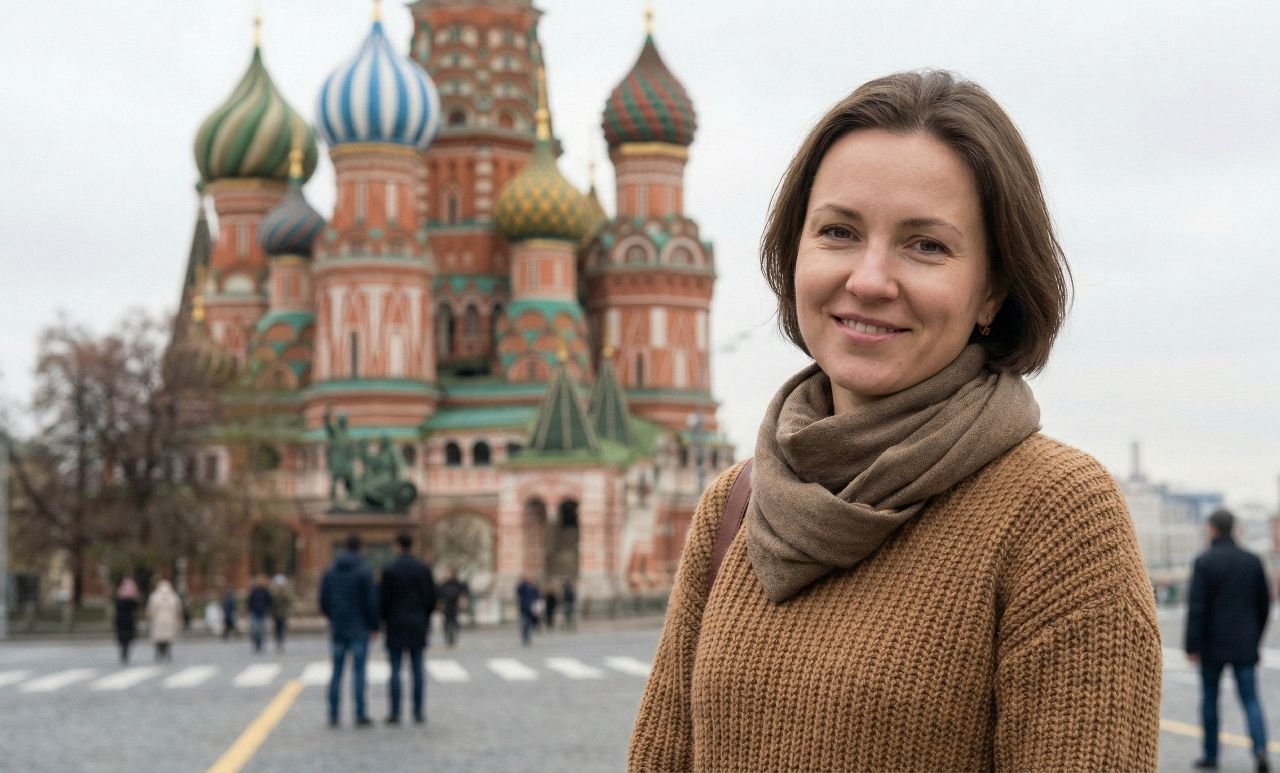
Anastasia is a Moscow-based travel blog writer who brings a local’s insight to one of the world’s most fascinating and misunderstood cities. Born and raised in Moscow, Russia, Anastasia shares an authentic, on-the-ground perspective on what it’s really like to explore the city beyond the postcards.
Her writing focuses on tourism in Moscow, practical guides for first-time visitors, and hidden corners that most travelers miss. In addition, Anastasia writes extensively about expat life in Moscow, covering everyday realities such as housing, transportation, cultural differences, and settling into life in the Russian capital.
As a solo traveler in her own city, she also documents Moscow through the lens of independence and curiosity — from navigating the metro alone at night to discovering cafés, museums, and neighborhoods that feel welcoming for solo visitors. Her work blends local knowledge with honest personal experience, helping travelers and expats alike feel more confident, informed, and inspired when discovering Moscow on their own terms.