
Red Square is where every visit to Moscow should start, and where most Muscovites end up taking out-of-town guests first too. The name has nothing to do with communism, whatever most visitors assume: krasnaya is the old Russian word for beautiful as much as it is the modern word for red, and the square earned the name centuries before the Soviet era. Together with the Kremlin, it’s been a UNESCO World Heritage Site since 1990, and it’s easy to see why once you’re standing in it.
What’s on Red Square itself
St Basil’s Cathedral is the building everyone recognises, with its cluster of colourful onion domes at the square’s southern end. It was built in the 1550s on the order of Ivan the Terrible to mark the capture of the Tatar stronghold of Kazan, and the exterior is genuinely more impressive than the interior, which is a warren of small connected chapels rather than one grand hall.
Lenin’s Mausoleum sits at the base of the Kremlin wall, opposite GUM. It still holds Lenin’s embalmed body and remains open to visitors on a limited schedule; check current opening days before you plan around it, since they’re restricted and change periodically. Expect a strict no-photography rule inside and a brief, orderly walk-through rather than a lingering visit.
GUM, the vast department store facing the mausoleum, is worth walking through even if you’re not shopping. It was the State Department Store in Soviet times and is now home to international fashion brands, but the 19th-century glass-roofed arcade itself is the real attraction. There’s a Soviet-style ice cream stand on the ground floor that’s become a minor tradition in its own right.

The State Historical Museum anchors the square’s northern end, and just behind it, a marker in the pavement marks Russia’s Kilometre Zero, the point from which road distances across the country are measured.
Getting into the Kremlin
The Kremlin is a working government complex as well as a historic site, so access is more structured than simply walking in. Cathedral Square, inside the walls, holds several cathedrals from the 15th and 16th centuries and is the part most visitors focus on: the Cathedral of the Dormition, historically used for coronations, is generally considered the most important of the group. The Armoury Chamber houses the Kremlin’s collection of imperial regalia, jewellery and historic artefacts, including the famous Fabergé eggs, and typically requires a separate, timed ticket bought in advance rather than at the gate.
Security screening applies to enter the grounds, similar to an airport, so arrive with time to spare and keep bags minimal. Large bags and tripods are commonly restricted. Ticket prices, opening days and which sections are open change periodically, so check the current situation close to your visit rather than relying on older guides.
Planning your visit
Give yourself at least half a day for Red Square and the Kremlin together, more if you want to see the Armoury properly. Arriving early, ideally when the square opens, means smaller crowds and better light for photos before tour groups arrive. Afterwards, Nikolskaya Street, leading off the square, has a good concentration of cafes if you want to sit down without going far, and Zaryadye Park, just behind St Basil’s, is worth the short walk for a green space with river views back toward the Kremlin walls.
Frequently Asked Questions
Do I need a ticket to enter Red Square?
No, the square itself is free and open to walk through. Individual sights inside the Kremlin walls, like the Armoury, need separate paid tickets.
How much time should I set aside?
At least half a day for Red Square and the main Kremlin sights; add more if the Armoury is a priority, since it rewards unhurried viewing.
Is Lenin’s Mausoleum always open?
No, it operates on a limited, restricted schedule that changes periodically. Check current opening days before you plan a visit around it.
Written by Anastasia Ivanova, Moscow native and author at allaboutmoscow.com. Last updated April 2026.
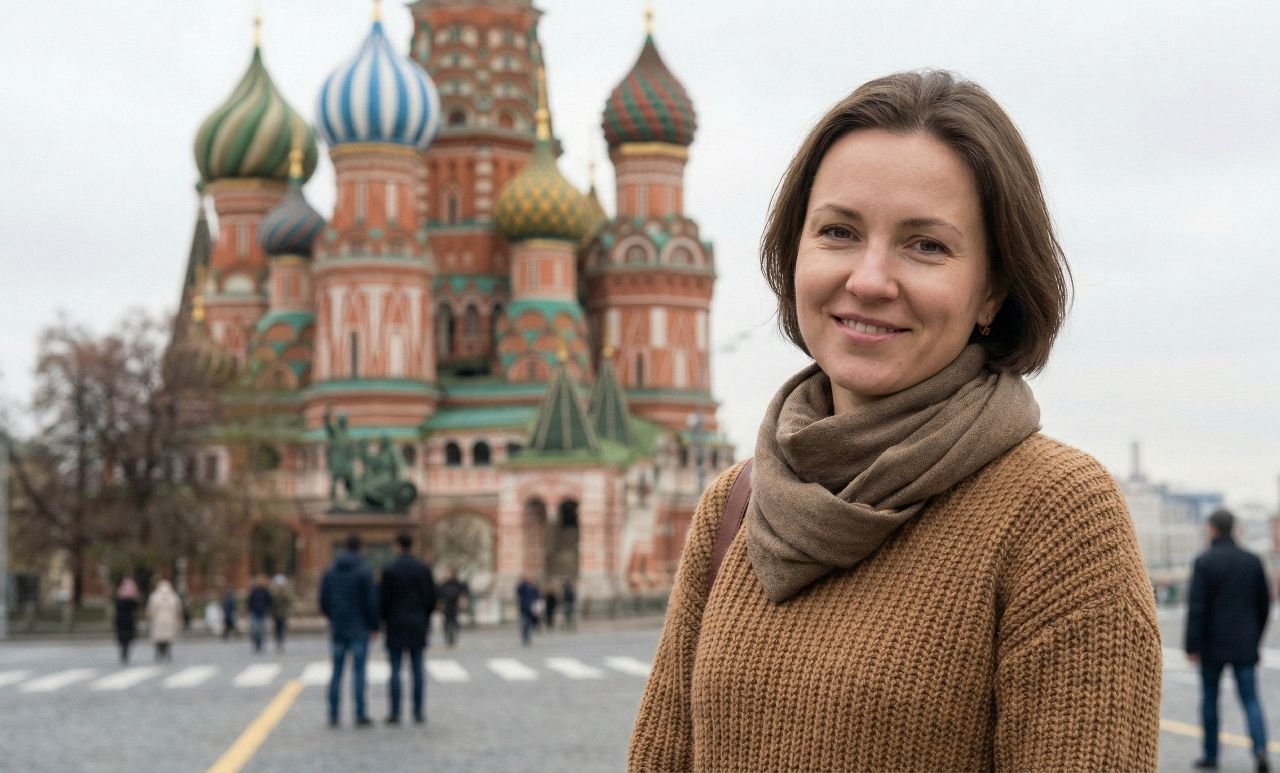
Anastasia is a Moscow-based travel blog writer who brings a local’s insight to one of the world’s most fascinating and misunderstood cities. Born and raised in Moscow, Russia, Anastasia shares an authentic, on-the-ground perspective on what it’s really like to explore the city beyond the postcards.
Her writing focuses on tourism in Moscow, practical guides for first-time visitors, and hidden corners that most travelers miss. In addition, Anastasia writes extensively about expat life in Moscow, covering everyday realities such as housing, transportation, cultural differences, and settling into life in the Russian capital.
As a solo traveler in her own city, she also documents Moscow through the lens of independence and curiosity — from navigating the metro alone at night to discovering cafés, museums, and neighborhoods that feel welcoming for solo visitors. Her work blends local knowledge with honest personal experience, helping travelers and expats alike feel more confident, informed, and inspired when discovering Moscow on their own terms.